

How to Use a 3D Printer
This post may contain affiliate links. As an Amazon Associate, I earn from qualifying purchases.
3D printing- also called additive manufacturing- is the process of transforming a digital file (CAD or 3D model) into a three-dimensional object. This 甜性涩爱在线播放 is based on adding successive layers of material following a specific shape or pattern to build the 3D object.
3D printing 甜性涩爱在线播放 has evolved over the years to make it more versatile in terms of the material used (plastic, powder, liquids, granules), as well as improving software and hardware accessibility to provide solutions in manufacturing and prototyping processes.
Improving the precision, repeatability, and versatility of 3D printing techniques has increased to the point that has become essential for engineers in all industries including biomedical, metal machining, aviation, dental, construction, automotive, and so on. Hence, nowadays learning how to use a 3D printer has become a necessity.
Types of 3D printing technologies
As stated above, there is a wide variety of applications for 3D printing machines, so in this sense, there are different types of technologies depending on the purpose, the material used, and the scale of the machine.
Here’s a short list of the most popular 3D printing technologies available in the market:
- Binder Jetting
- Direct Energy Deposition
- Material Extrusion or Fused Deposition Modeling (FDM)
- Material Jetting
- Powder Bed Fusion
- Vat Polymerization
Which 3D printing 甜性涩爱在线播放 is the best for beginners?
The FDM 甜性涩爱在线播放 is a very affordable option and offers great results at small and medium scales. This 甜性涩爱在线播放 uses a spool of filament inserted into an extrusion head with a heated nozzle. The extrusion head heats, therefore, the material heats and is then placed at set locations, where it cools to create a layer of material. Here’s our list of the best beginner 3D printers.
These machines are easy to set up at home or in small spaces and easy to manipulate without having specialized technical support. They also require low-energy consumption and usually don’t need artificial ventilation to work appropriately. Also, using plastic materials is an advantage due to their malleability, low costs, and market availability.

- One-Click Automatic Printing: Experience hassle-free 3D printing with the Adventurer 5M Series. Enjoy automatic bed leveling for flawless first layers, ensuring consistent adhesion and saving time with no manual adjustments required.
- 12X Ultra Fast Printing: Featuring a CoreXY structure with 600mm/s travel speed and 20000mm/s² acceleration, the AD5M maximizes efficiency, reduces production cycles, and ensures high precision, making it ideal for rapid prototyping and mass production.
- Smart and Efficient Design: Quick 3-second nozzle changes, a high-flow 32mm³/s nozzle, and fast 35-second warm-up to 200°C deliver stable high-speed printing. Its dual-sided PEI platform and versatile options provide easy removal and adaptability for various creative projects.

- Up to 16 Colors: Bring your designs to life with vibrant multi-color/multi-material printing capabilities, perfect for showcasing your creativity. Note: Connecting Bambu Lab AMS is required.
- 500mm/s and 20000 mm/s² Acceleration True High Speed: Don't wait around for your masterpieces. Lightning-fast printing speed lets you focus on creating, not waiting.
- Enclosed Design: Fully enclosed body improves print performance for advanced filaments. Automatic Bed Leveling: Say hello to high-quality, successful prints. Auto bed leveling makes 3D printing such an easy thing.
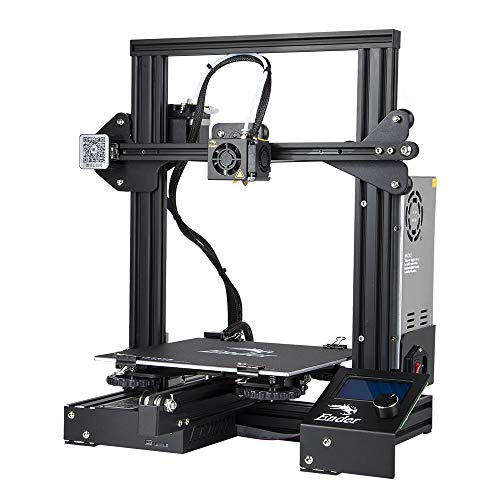
- Resume Printing Function: no worry to the immediate power outage or electric circuit error, Ender 3 has the ability to resume printing even after a power outage or lapse occurs, you can continue to print
- Creality Ender 3 3d printer, it is the most basic 3d printer model, more students and beginners can learn the 3d printer by this model, it can help to excercise your hands-on skills. It comes with several assembled parts, you need about 2 hours to assemble
- Advanced Extruder 甜性涩爱在线播放: Ender 3 upgraded extruder greatly reduces plugging risk and bad extrustion; V-shape with POM wheels make it move noiseless, smoothly and durable
How does the FDM 3D printer work?
To learn how an FDM 3D printer works, you need to identify each part of the machine and how the printer uses the coordinate system to move across the three axes: X, Y, and Z.
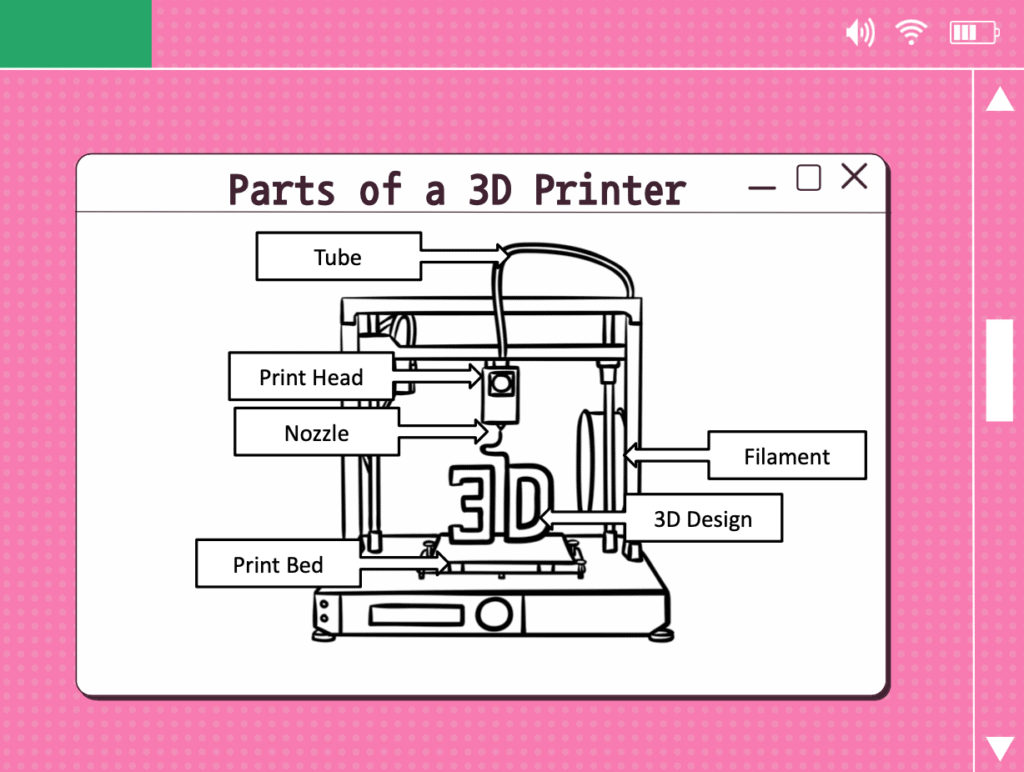
These are the main parts of a common FDM 3D printer:
- Build platform: The build platform (or print bed) is the horizontal surface (usually square-shaped) where the material will be laid to build the 3D object. They usually include heated beds to promote the adhesion of material and allow a smooth and continuous process.
- Extruder: The extruder is the component responsible for handling and moving the filament (printing material) in and out of the printhead. Depending on the extruder setup (direct or Bowden), the extruder and the printhead could be together as just one component (i.e. the block that moves along the gantry or gantries). From this perspective, the extruder consists of two sub-components:
- The cold end is the mechanical part that includes the motor, drive gears, and other small components that push and pull the material.
- The hot end contains a heater and a nozzle, responsible for heating the filament so that it can be extruded out of the latter. In the case of a Bowden setup, the hot end is not part of the extruder.
- Printhead(s): There can be one or multiple printheads on a 3D printer, though most FDM printers only have one.
- On the printhead, between the hot end and the cold end, there is a heatsink and fan, responsible for maintaining the cold end at a cool temperature to avoid jamming.
- In addition to the heatsink fan, there’s the part cooling fan responsible for cooling the molten material after exiting the hot end, to allow printing layer by layer.
- Control interface: The most recent 3D printers in the market have a touchscreen that’s used for controlling the 3D printer. They usually include an SD card slot or USB port to share and select the printing files with the machine. The LCD usually allows you to control the main printing parameters such as the thickness of each layer, temperature, and extrusion speed.
What is an STL file?
The STL file format contains all the geometric information regarding the CAD model you want to print, which works together with a 3D Slicer (software) to communicate with the 3D printer. The STL file encodes the information using a concept called “tessellation” to encode the surface geometry of the object.
What is a Slicer program?
Once you have the STL file which contains the CAD model, you need to process the information through software called Slicer, to generate the instructions the machine needs to complete the printing process.
This program allows users to adjust the dimensions of the printing bed, provide information about the make and model of the printer, the material that will be used (type of filament), and adjust physical parameters such as temperature, extrusion speed, wall thickness, and so on. All of this information is key to achieving a neat finish of the 3D object and an appropriate functioning of the machine.
Once you set the parameters, you can proceed to output the design as a G-Code (generated automatically by the Slicer) which the 3D machine will read using an SD card or USB port (depending on the machine model).
The most common Slicers in the market are Ultimate Cura, Simplify 3D, Prusa Slicer, Octoprint, and Astroprint. Most of them offer a limited service for free and an extra monthly/annual fee for more advanced options. Although, some 3D printers currently include their Slicer software with the purchase of the machine, so be sure to read all the 3D printer´s features before buying one.
Our favorite 3D printer for kids, the Flashforge Finder 3.0 includes its own slicing software.
Where to find STL files?
If you want to start using your 3D printer but don’t have previous experience in 3D modeling or CAD software you can still use a 3D printer. There are several websites and online platforms with hundreds of STL files for users to download. These platforms also can come in handy for your first print, since the files they usually have available have worked successfully with different models and brands of 3D printers.
Some websites offer free files and others offer paid packages with pre-designed objects, they usually have extensive libraries where you can use keywords to look for the object you want to print. Here’s a short list of websites that contain hundreds of STL files:
- Thingiverse
- Cults.
- 甜性涩爱在线播放
- STLfinder
Key parameters to consider when using your 3D printer
As stated above, adjusting the printing parameters is key to obtaining a good result, so it is essential to understand the critical parameters such as nozzle and bed temperatures, build speed, layer height, and cooling fan speed and their relationship with the printing material.
The most common materials used in FDM 3D printers are ABS, PLA, PETG, and PEI, which are plastic polymers with different characteristics. In this sense, here are a few tips you use as guidance to enhance the 3D printer´s performance.
- Print setting short layers to produce smoother parts, starting at 0.2 mm, especially on curved or highly detailed geometries. Always check the nozzle diameter, which will give you the smallest dimension possible for the wall thickness of your 3D objects. Walls have to be at least 2 to 3 times larger than the nozzle diameter to avoid breakage.
- For intricate models (or objects greater than 200mm), it is better to break the object into smaller parts and then reassemble them after each part is printed.
- In most cases, PLA can be printed at a speed between 60mm/s and 70 mm/s, while thermoplastics with higher melting points such as ABS require inferior speeds (from 40 to 60 mm/s)
- Filaments with higher melting points require careful ventilation to avoid warpage (distortion of the printed parts). In this sense, it is advisable to print in closed environments with no interference from the surrounding air.
- On general basis, these are the working temperatures according to the type of filament:
- ABS: from 230 to 260C and set the printing bed between 80 and 110C
- PLA: from 190 to 230C and set the printing bed between 60 and 70C
- PETG: from 220 to 260C and set the printing bed between 65 and 85C
Although it may seem like there’s too much information to handle at once, many 3D printing manufacturing and material providers offer guidance in setting the printing parameters. Don’t forget that practice will help you improve the printing outcome, and you’ll learn in the process.
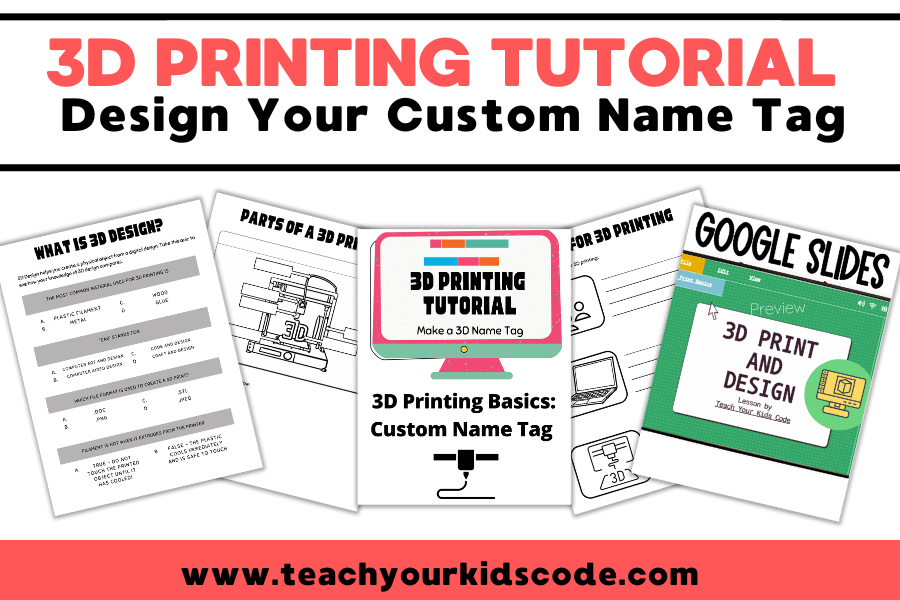
3D Printing Tutorial and Classroom Guide
Our 3D printing tutorial will take you through the steps of designing your own name tag on TinkerCAD. This tutorial and classroom guide includes 甜性涩爱在线看 and a google slides presentation.
3D Printing for the first time
First times are always intimidating, so here’s a quick checklist to guide you through the process and make your first experience with 3D printing easy and fun.
- Always read the assembly instructions and don’t skip any step, it may seem obvious, but it is crucial for the appropriate functioning of the machine. Place the 3D printer in a clean, closed environment with enough space to operate it.
- After completing the assembly, calibrate the printing bed before using it. Use the tools the 3D printing provides to adjust the bed such as a T-square and a level to make sure the bed is not tilted at any point. Manufacturers and users recommend using a small piece of paper to calibrate the bed, making sure the printing head and the bed are equally spaced in each corner and center of the bed. Slipping the piece of paper between the two surfaces will help you calibrate the bed by moving it up or down with the manual gears.
- Always check if any part of the machine needs lubrication before printing for the first time (many 3D printers use WD-40 lubricant for the threaded rod and nut).

Kate is mom of two rambunctious boys and a self-proclaimed super nerd. With a background in neuroscience, she is passionate about sharing her love of all things STEM with her kids. She loves to find creative ways to teach kids computer science and geek out about coding and math. She has authored several books on coding for kids which can be found at Hachette UK.


